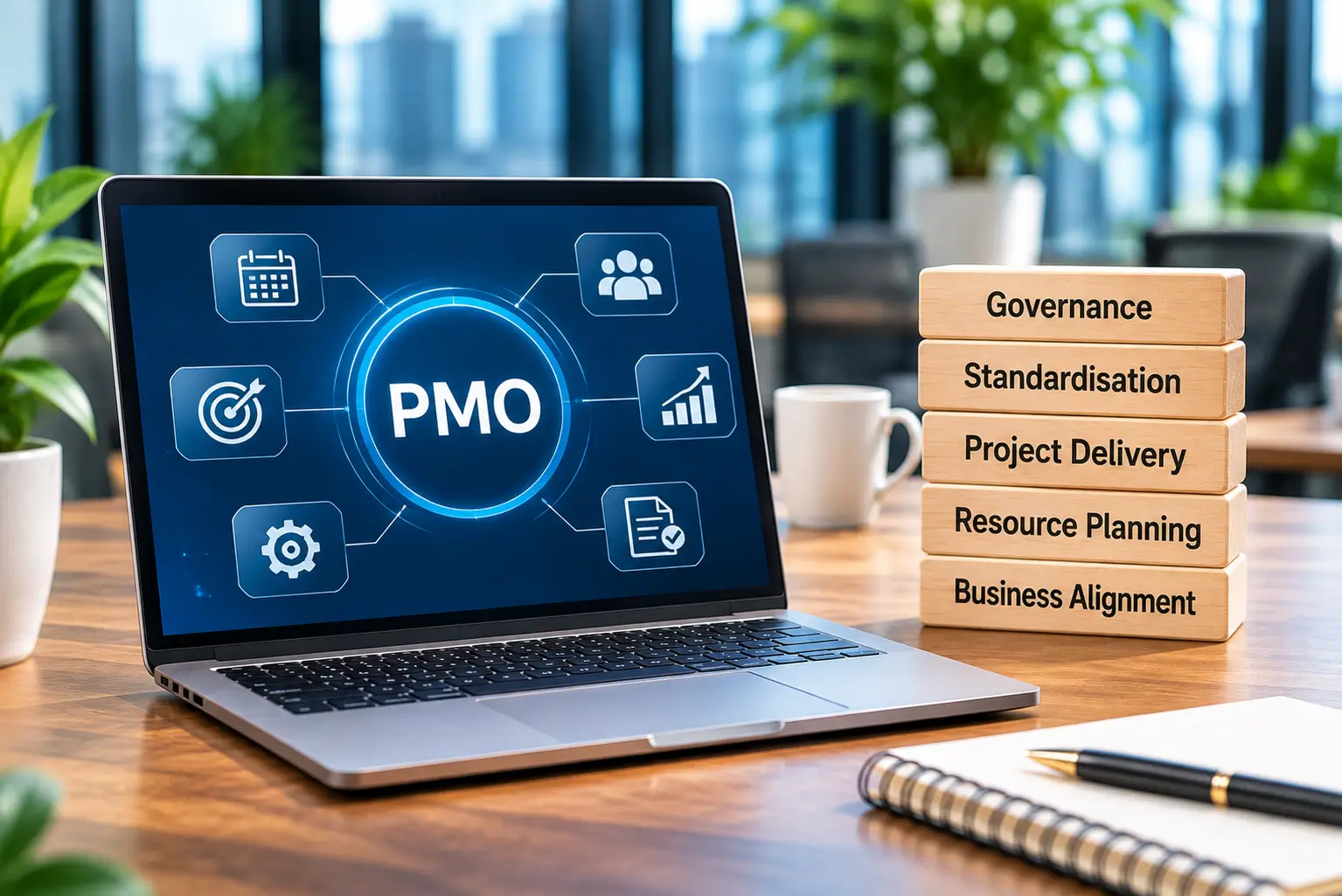
A PMO (Project Management Office) is the team or function that sets the standards, governance and visibility for how projects are run across an organisation. It makes sure projects align to strategy, follow a consistent method, and are tracked and reported in one place. You likely need one when you have multiple projects, inconsistent delivery, or poor visibility into what is on track and what is not. Our PMO consulting helps you set one up at the right weight.
What a PMO is
A Project Management Office is the function that brings order to how projects are run. It defines the method teams follow, keeps a single view of every project, and makes sure work connects back to business goals. Done well, it is the reason the right projects get prioritised, risks are seen early, and leadership actually knows what is happening across the portfolio.
A PMO is the bridge between strategy and delivery. Strategy decides what matters, and the PMO makes sure the projects that follow are the ones that deliver it.
The three types of PMO
- Supportive: provides templates, guidance and best practice. Low control, helpful for mature teams.
- Controlling: sets standards and requires compliance with them. Medium control, good for consistency.
- Directive: directly manages the projects itself. High control, used where delivery must be tightly governed.
The right type depends on how much consistency and control your portfolio needs. Many organisations start supportive and tighten over time.
What a PMO actually does
Day to day, a PMO sets the delivery method and templates, prioritises and tracks the project portfolio, manages risks and dependencies across projects, reports status to leadership, and builds project management capability in the organisation. In short, it makes delivery predictable instead of personality-dependent.
A good PMO does not slow projects down. It stops the organisation from doing the wrong projects slowly.
PMO vs project manager
| Project manager | PMO | |
|---|---|---|
| Scope | One project | All projects |
| Focus | Deliver this on time and budget | How every project is run |
| Output | A completed project | Standards, visibility, governance |
| Question it answers | Are we on track? | Are we running the right projects, the right way? |
Signs you need a PMO
- Projects routinely run late or over budget.
- Nobody can give leadership a clear, single view of what is in flight.
- Every project is run differently, so lessons never carry over.
- Resources clash because priorities are not managed centrally.
- Important initiatives stall, which is one of the signs you need outside help.
How to set one up
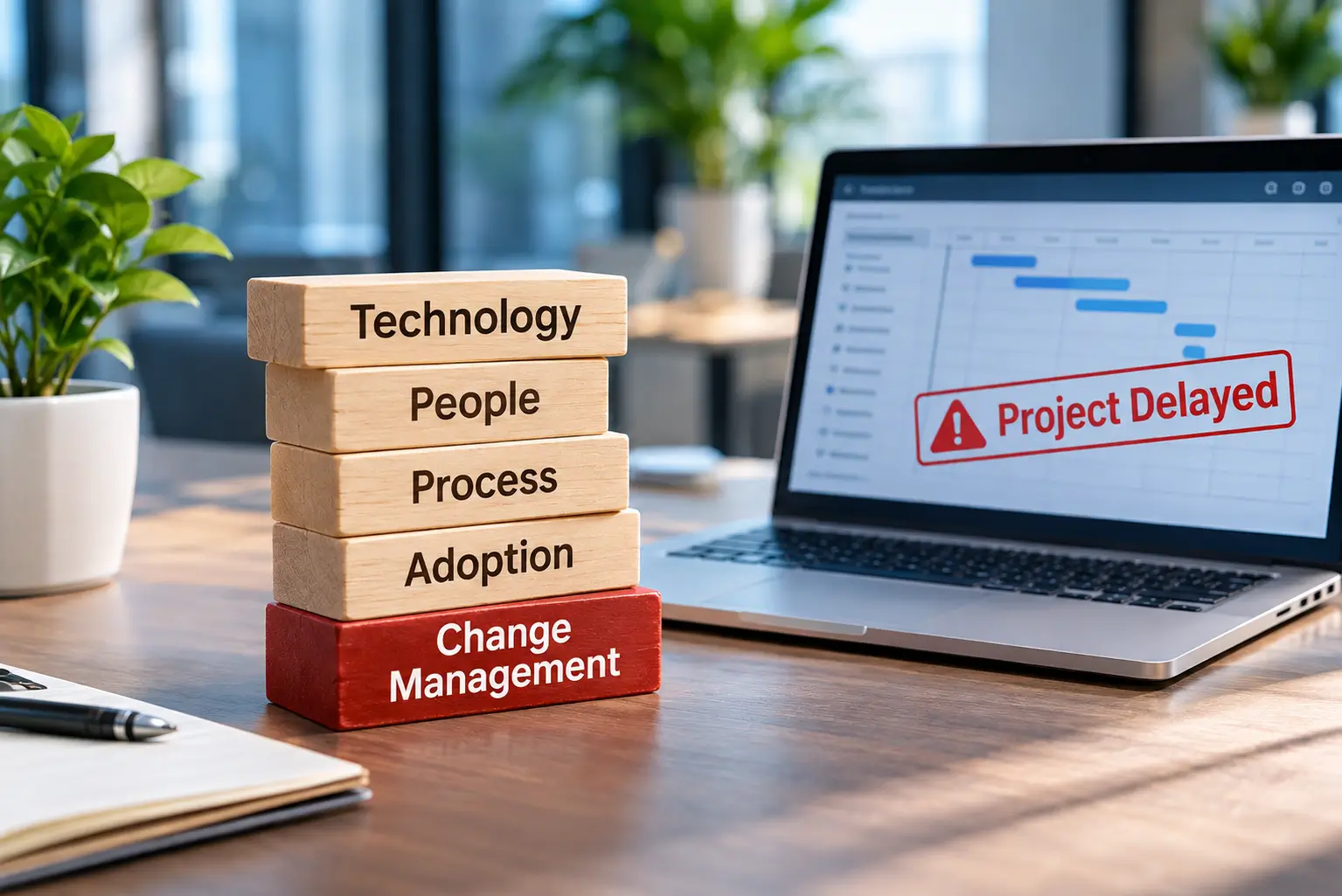
Start by agreeing the problem the PMO is meant to solve, then choose the lightest type that solves it. Define a simple, consistent delivery method, a single reporting view, and a short list of metrics. Pilot it on a handful of projects, prove the value, then expand. Pair it with change management so the organisation adopts the new way of working rather than resisting it.
Metrics that show it is working
A PMO should make delivery measurably better: more projects delivered on time and on budget, fewer surprises, clearer leadership visibility, and better use of resources. If the reporting grows but delivery does not improve, the PMO has become overhead, and needs trimming. Schnell Technocraft helps you set up a right-sized PMO and avoid exactly that. To talk it through, contact us.