
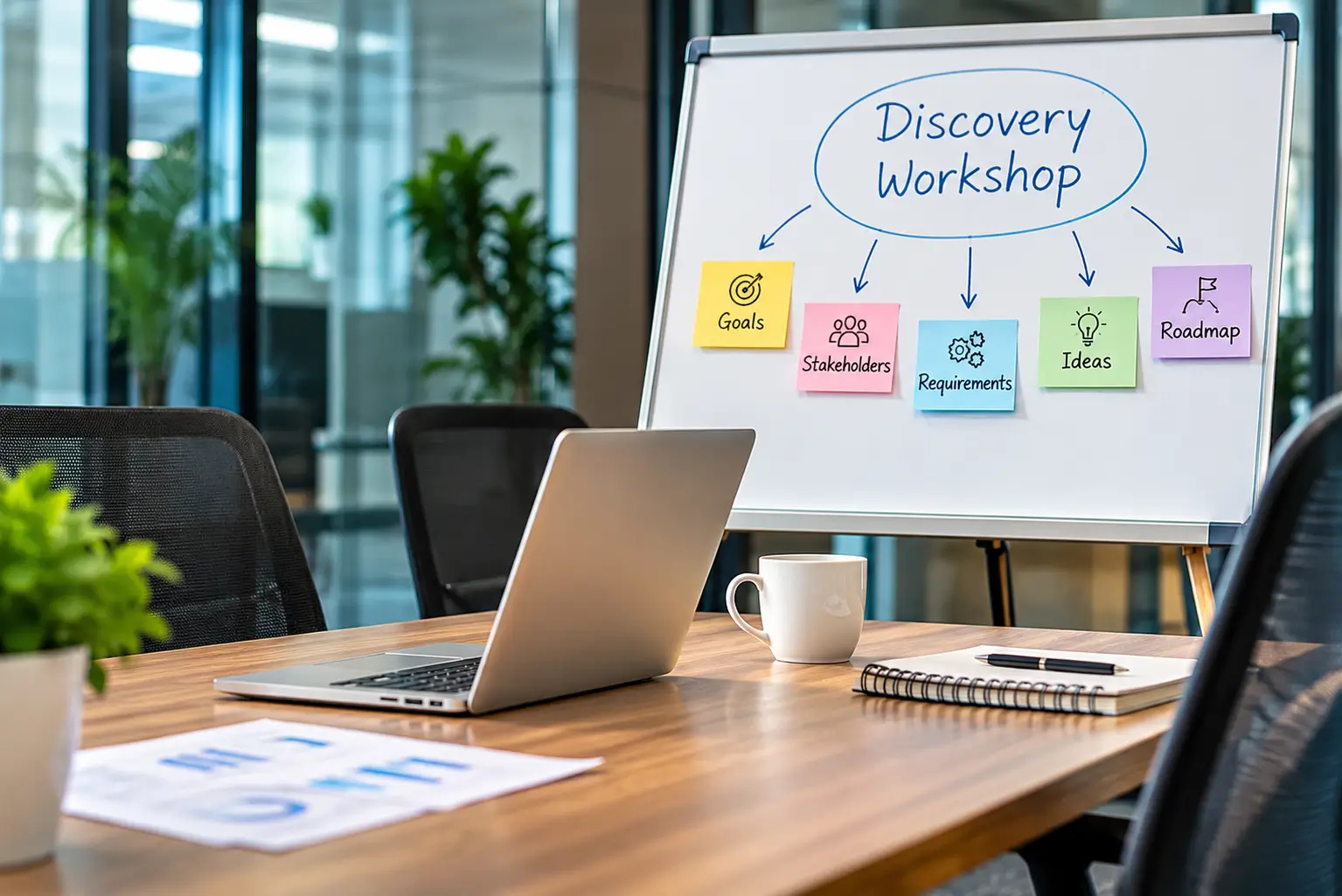
A discovery workshop is a structured working session at the start of a project where stakeholders align on goals, current-state problems, scope, risks and success measures. It turns vague ambitions into a clear, shared brief so the team builds the right thing. Starting with discovery reduces rework, surprises and cost overruns later, which is why experienced IT consulting teams insist on it.
What a discovery workshop is
A discovery workshop is a facilitated session, usually half a day to a couple of days, that brings the right people together at the very start of a project. The goal is simple: agree on what problem you are solving, what success looks like, what is in and out of scope, and what could go wrong. It replaces assumptions with a shared, written understanding.
It sits at the front of almost every well-run engagement, from a cloud migration to a digital transformation. Think of it as agreeing the destination and the route before anyone starts driving.
Why skipping discovery is expensive
When teams skip discovery and jump to building, the cost does not disappear, it moves downstream where it is far larger. A misunderstanding caught on a whiteboard costs a conversation. The same misunderstanding caught after months of development costs rework, delay and budget. Industry research has long shown that fixing a requirements error after build is many times more expensive than catching it at the start.
Discovery also surfaces the awkward truths early: conflicting goals between departments, a dependency nobody owns, a compliance need such as the DPDP Act. Better to learn these on day one than at launch.
It is always cheaper to change a plan than to change a build. Discovery is where you still have a plan to change.
Who should be in the room
A discovery workshop is only as good as the people in it. You want:
- A business sponsor who owns the outcome and can make decisions.
- Subject-matter experts who know how the work really happens today.
- End users who will live with the result, their input prevents solutions nobody wants.
- Technical leads who understand constraints and feasibility.
- A neutral facilitator who keeps the session honest and on track.
What a good discovery workshop covers
A strong session works through a clear sequence: the business goals behind the project, the current-state process and its pain points, the future-state you want, the scope boundaries, the risks and dependencies, and the success measures you will hold the project to. Along the way it maps where you are against where you want to be, which is the heart of any technology strategy and roadmap.
A half-day discovery workshop agenda
- 0:00 to 0:20 Context and goals: why are we here, what does success look like.
- 0:20 to 1:00 Current state: how the process works today, where it hurts.
- 1:00 to 1:45 Future state: the outcome we want, told as real user journeys.
- 1:45 to 2:15 Scope and priorities: what is in, what is out, what comes first.
- 2:15 to 2:45 Risks, dependencies and compliance.
- 2:45 to 3:00 Success measures and next steps.
What you walk away with
A good discovery produces a short, shared brief: the agreed goals, a current and future-state summary, a scoped list of priorities, known risks, success measures, and a high-level roadmap with an honest first estimate. That document becomes the reference point for the whole project, and the foundation for proper project governance. For more on turning a plan into delivery, see what a PMO is and whether you need one.
How Schnell runs discovery
Schnell Technocraft starts most engagements with assessment, discovery and workshops. We facilitate the session, capture the current and future state, and hand back a clear brief and roadmap you can act on, with or without us. It is a low-cost, high-leverage way to make sure the money that follows is spent on the right thing. To book one, get in touch.